
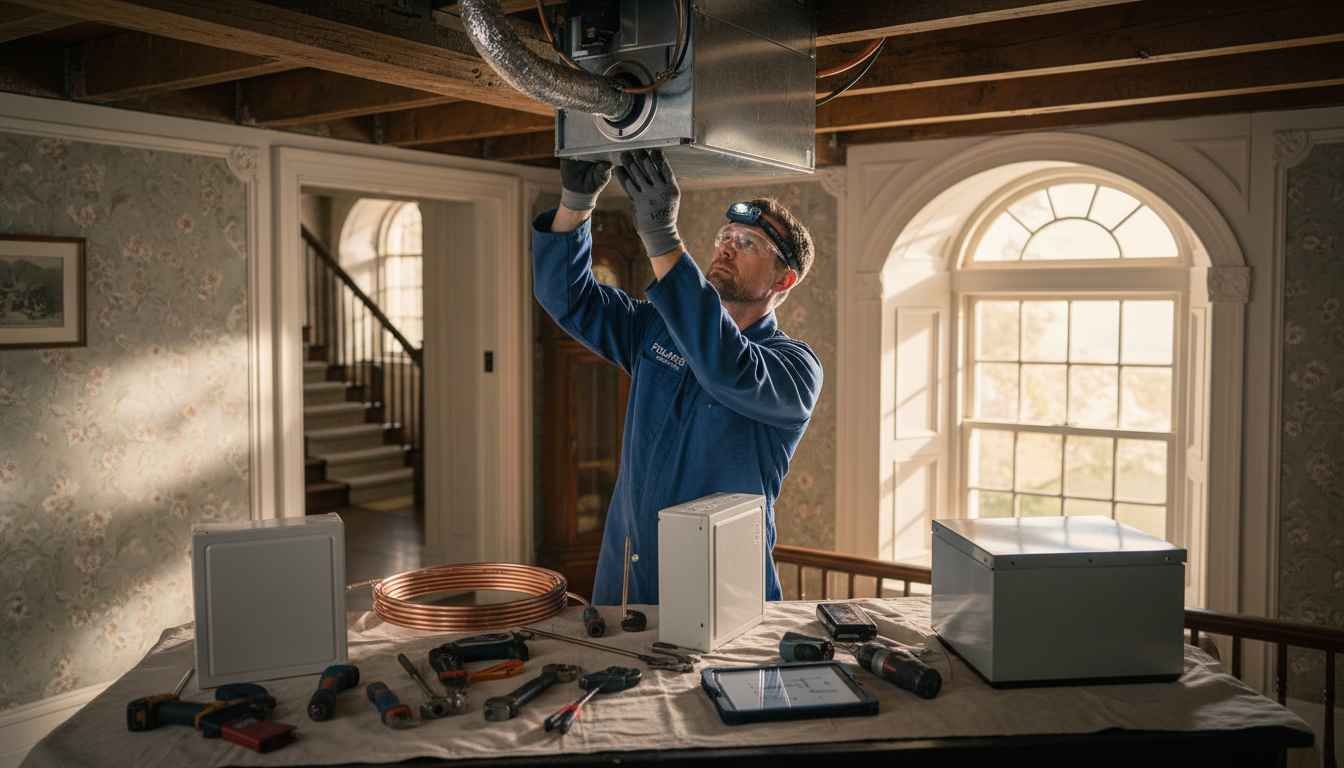
It’s time to wake up. Many homeowners envision modern comfort but live in houses built long before central heating, cooling, or energy-efficient systems were standard. Integrating a contemporary HVAC system into an older structure is more than a retrofit; it is a strategic project that blends architectural sensitivity with technical precision. Ignoring foundational considerations can lead to costly missteps, inefficiencies, or compromised indoor air quality.
Older homes often feature irregular layouts, legacy materials, and unique structural challenges. Walls may be narrower, attics lower, and basements partially finished, all factors that influence duct routing, ventilation, and system performance. Unlike new construction, where HVAC design is embedded in blueprints, older homes require a holistic assessment to align the mechanical system with the home’s existing infrastructure.
Assessing Feasibility and Load Requirements
Before installation, calculating the heating and cooling load is essential. A miscalculated system can result in inconsistent temperatures, higher energy bills, or premature equipment failure. Load calculations for older homes often reveal that traditional rules of thumb – like sizing based solely on square footage – are insufficient. Factors such as insulation type, window efficiency, ceiling height, and air leakage significantly affect capacity needs. According to the American Society of Heating, Refrigerating and Air-Conditioning Engineers (ASHRAE), older homes often require 15-30% more duct or system customization than modern houses.
Performing a professional energy audit can highlight areas for improvement before installation. Sealing leaks, insulating walls and attics, and upgrading windows are not just efficiency measures – they reduce system strain and extend the lifespan of your HVAC investment. These upgrades also lay the groundwork for modern systems to operate at peak performance.
Choosing the Right System
For older houses, selecting a system requires balancing performance, space constraints, and aesthetic impact. Traditional central air may not always be feasible if extensive ductwork is impractical. In such cases, alternatives like mini-split heat pumps or high-velocity systems can deliver comfort without extensive structural modifications. Mini-splits provide zoned control, which can be especially advantageous in homes with multiple levels or segmented layouts. High-velocity systems use smaller ducts and flexible tubing, reducing the need for invasive construction while maintaining airflow efficiency.
When evaluating equipment, efficiency ratings such as SEER (Seasonal Energy Efficiency Ratio) and HSPF (Heating Seasonal Performance Factor) are critical. Even modest gains in efficiency can translate to hundreds of dollars in energy savings annually. This is where expert guidance from certified professionals and organizations like AHRI ensures that equipment selection aligns with both the home’s characteristics and long-term energy goals.
As discussions around sustainability and environmental responsibility become increasingly important, many homeowners and businesses are seeking effective ways to improve their air quality while minimizing waste. One often-overlooked aspect of this effort is the proper disposal and management of HVAC filters. These filters play a crucial role in maintaining clean air indoors, but many people are unaware of the environmental impact associated with their disposal. To address this concern, it’s essential to explore whether are HVAC filters recyclable and what strategies can be implemented to enhance sustainable air quality management. By understanding the lifecycle of these filters and exploring eco-friendly alternatives, we can make informed choices that benefit both our health and the planet.
Integration Challenges in Older Homes
Older houses frequently present hidden challenges: uneven floors, non-standard wall cavities, and outdated electrical systems. Routing ducts may require creative solutions, such as soffits, underfloor channels, or attic pathways. Electrical upgrades are often necessary to meet the load requirements of modern HVAC units. Without careful planning, these issues can lead to unforeseen expenses or compromise the structural integrity of the home.
Another consideration is the balance between indoor air quality and ventilation. Older homes often have poor air circulation, leading to hotspots or cold zones. Installing an effective air distribution system, paired with filtration and ventilation enhancements, ensures comfort and promotes healthier indoor environments. Smart thermostats and zoning systems further optimize energy use by delivering conditioned air where it is most needed.
Potential Drawbacks and Who Should Avoid This
Not all homeowners are ideal candidates for a full HVAC retrofit in an old house. If the structure is historically protected, extensive ductwork could conflict with preservation requirements. Homes with severe structural decay or persistent moisture issues may require remediation before any mechanical upgrades. Additionally, households unwilling to invest in preparatory improvements like insulation or electrical upgrades may face underperformance, higher energy costs, and frequent maintenance issues.
Another drawback is cost. Retrofitting an older home can range from 20% to 50% more than a comparable new installation in a modern home, due to labor, custom ducting, and additional upgrades. Budget-conscious homeowners should consider phased installations or alternative solutions, such as mini-splits or hybrid systems, that reduce immediate disruption while still enhancing comfort.
Common Mistakes to Avoid
Improper system sizing is the most frequent mistake, often resulting in an overworked or underpowered unit. Skipping an energy audit or ignoring insulation improvements compromises efficiency and can shorten equipment lifespan. Installing ductwork without considering airflow patterns or ceiling and floor constraints leads to uneven heating and cooling. Finally, neglecting to consult qualified professionals familiar with older structures can cause costly errors in both installation and long-term maintenance.
Strategic Planning for Long-Term Performance
Successful integration requires a strategic approach: start with a comprehensive assessment, address structural and efficiency gaps, select equipment that aligns with both space and performance needs, and plan ducting and controls with precision. Regular maintenance post-installation, including filter changes, duct inspections, and system balancing, ensures optimal performance. By approaching the project as a long-term investment rather than a quick fix, homeowners can achieve consistent comfort, energy efficiency, and property value enhancement.
Adding HVAC to an old house is a sophisticated endeavor that merges engineering, architectural awareness, and strategic foresight. With careful planning, appropriate system selection, and attention to airflow and efficiency, it is possible to modernize comfort without compromising the character of a historic structure. The effort yields more than temperature control; it enhances living quality, reduces energy costs, and preserves the home for future generations.
